
Client Background
The City of Albuquerque needs a centralized bed management system that could track real-time availability, manage check-ins, and automatically synchronize with city data sources. The key objectives included:
- Developing a Django-based web application for managing shelter beds and tracking occupancy
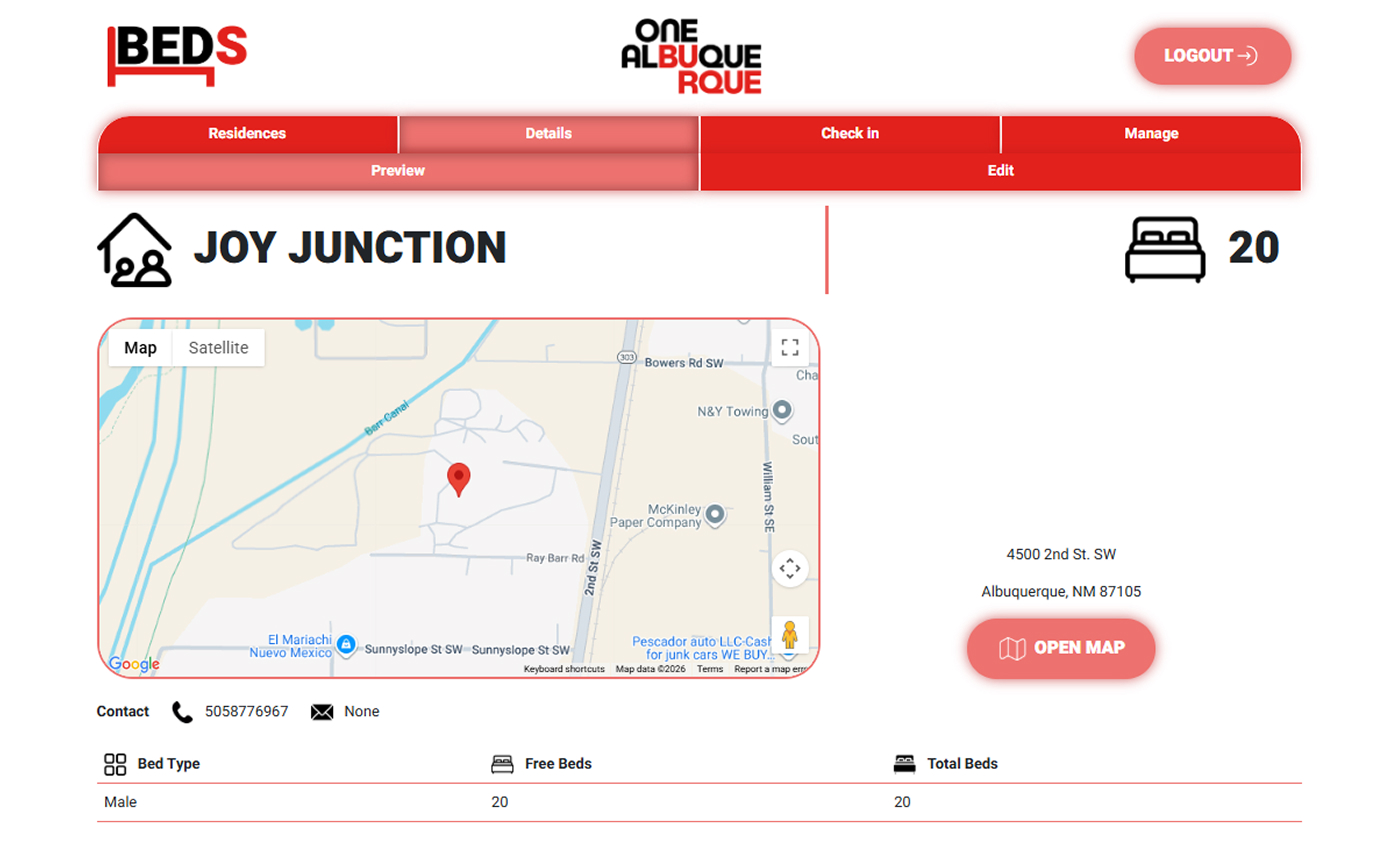
- Implementing real-time bed availability tracking by bed type (family, couples, male, female, youth, respite)
- Integrating automated daily updates from Albuquerque’s ArcGIS data feed
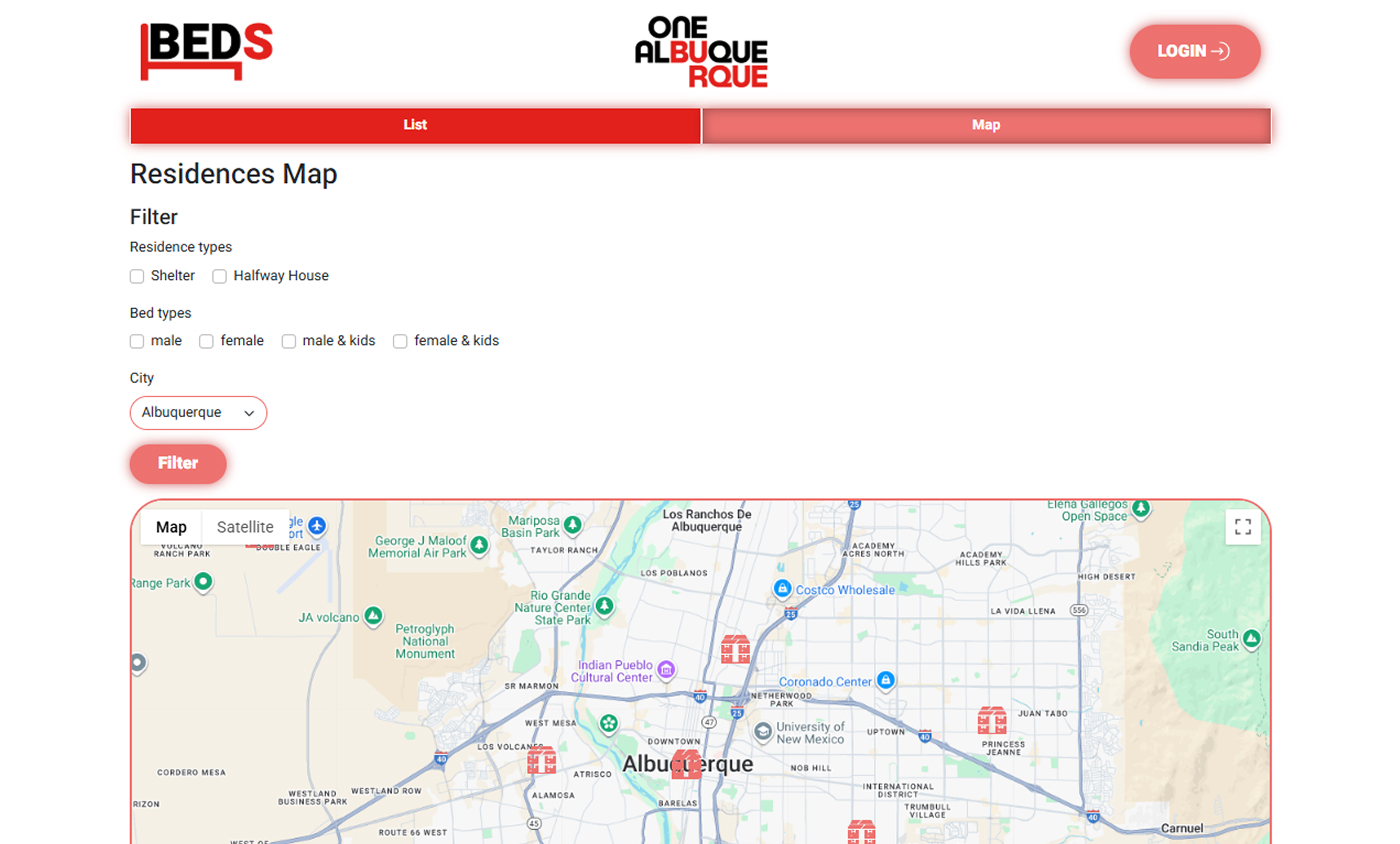
- Creating an interactive map interface for visualizing shelter locations and availability
- Building a check-in system using HMIS (Homeless Management Information System) IDs for tracking
- Supporting multiple shelter types including regular shelters and halfway houses
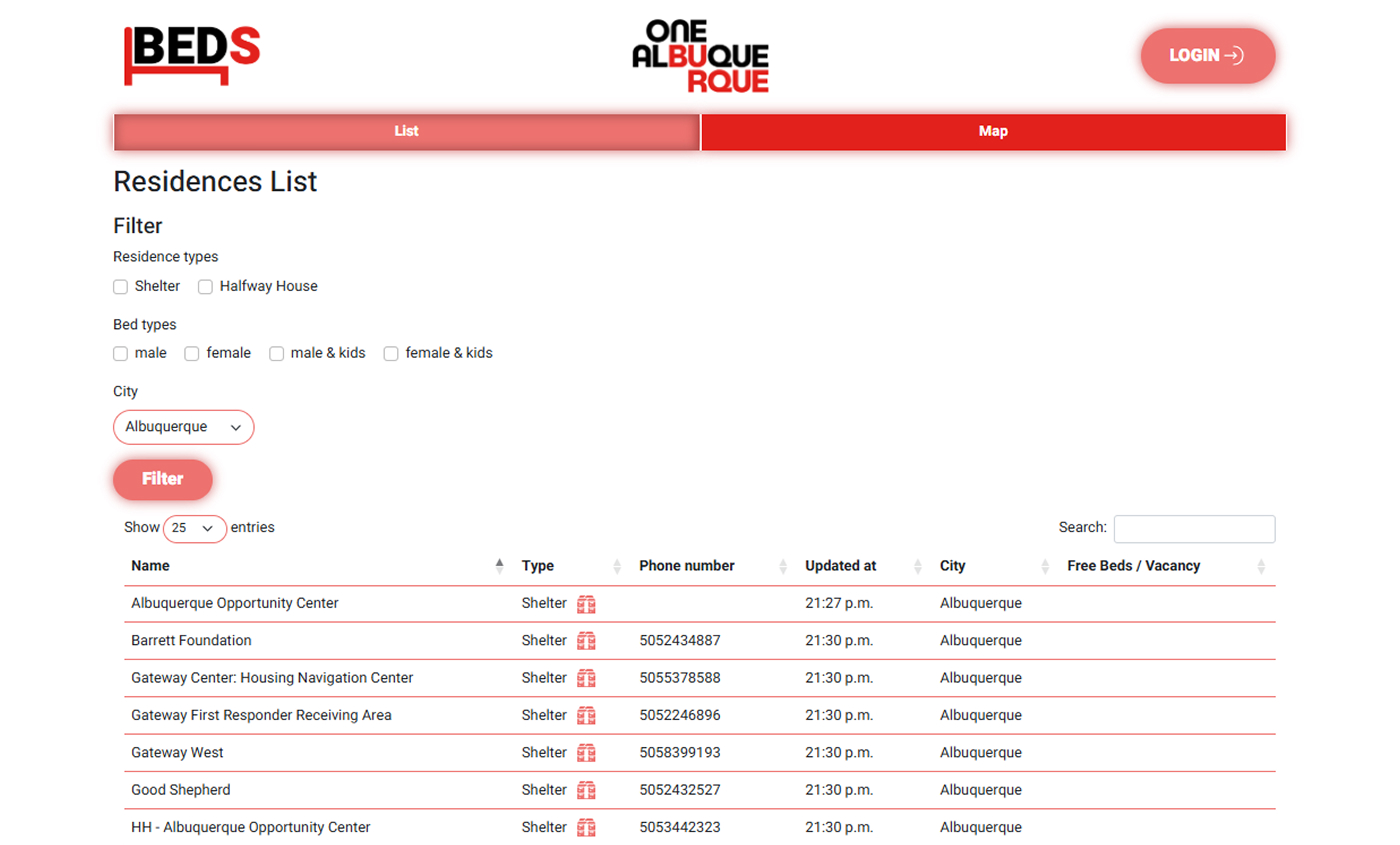
- Implementing filtering and search capabilities for finding available beds
Project Scope
- Django-based bed management system for tracking shelter capacity and occupancy in real-time
- Automated data synchronization with Albuquerque’s ArcGIS FeatureServer, updating shelter information daily without manual intervention
- Google Maps integration providing interactive visualization of shelter locations with real-time bed availability displayed on markers
- HMIS ID check-in system enabling shelter staff to log admissions while preventing duplicate check-ins per day
- Multi-bed type support tracking availability for family, couples, male, female, youth, and respite beds separately
- Google Places API integration for automated address geocoding and place information retrieval
- Scheduled task system using Django-Q for reliable daily data updates from city systems
- Filtering and search functionality allowing users to find shelters by location, bed type, and availability
- Multi-step wizard interface for creating and managing shelters with address autocomplete and validation
- Halfway house management supporting Oxford House-style facilities with vacancy tracking
Gallery
Looking for a Similar Solution?
This case is just one example of how we help clients solve business challenges through thoughtful design, development, and automation. Let's discuss how we can support your project.